You found a used car at a great price. Then you notice the title says “bonded.” That one word raises questions. Is the car stolen? Will you lose money or struggle to get insurance?
A bonded title in Texas is a legal title. A surety bond covers the ownership gap when the original title is missing or incomplete.
Here’s what that means for buyers, the real risks, and how to protect your money before you pay.
TL;DR
- A bonded title is a legally valid Texas title backed by a surety bond. The state issues one when the original title is missing or incomplete.
- The surety bond does not transfer to the buyer. The person who purchased the bond covers any claims. Not you.
- Claims against bonded titles are rare. After three years with no disputes, the title converts to a standard clean title.
- Red flags include VIN mismatches, sellers who refuse to meet at the county tax office, and pressure for cash-only deals with no receipt.
- Most traditional lenders won’t finance a bonded title vehicle. But the bonded status gives you leverage to negotiate a lower price.
What Is a Texas Bonded Title?
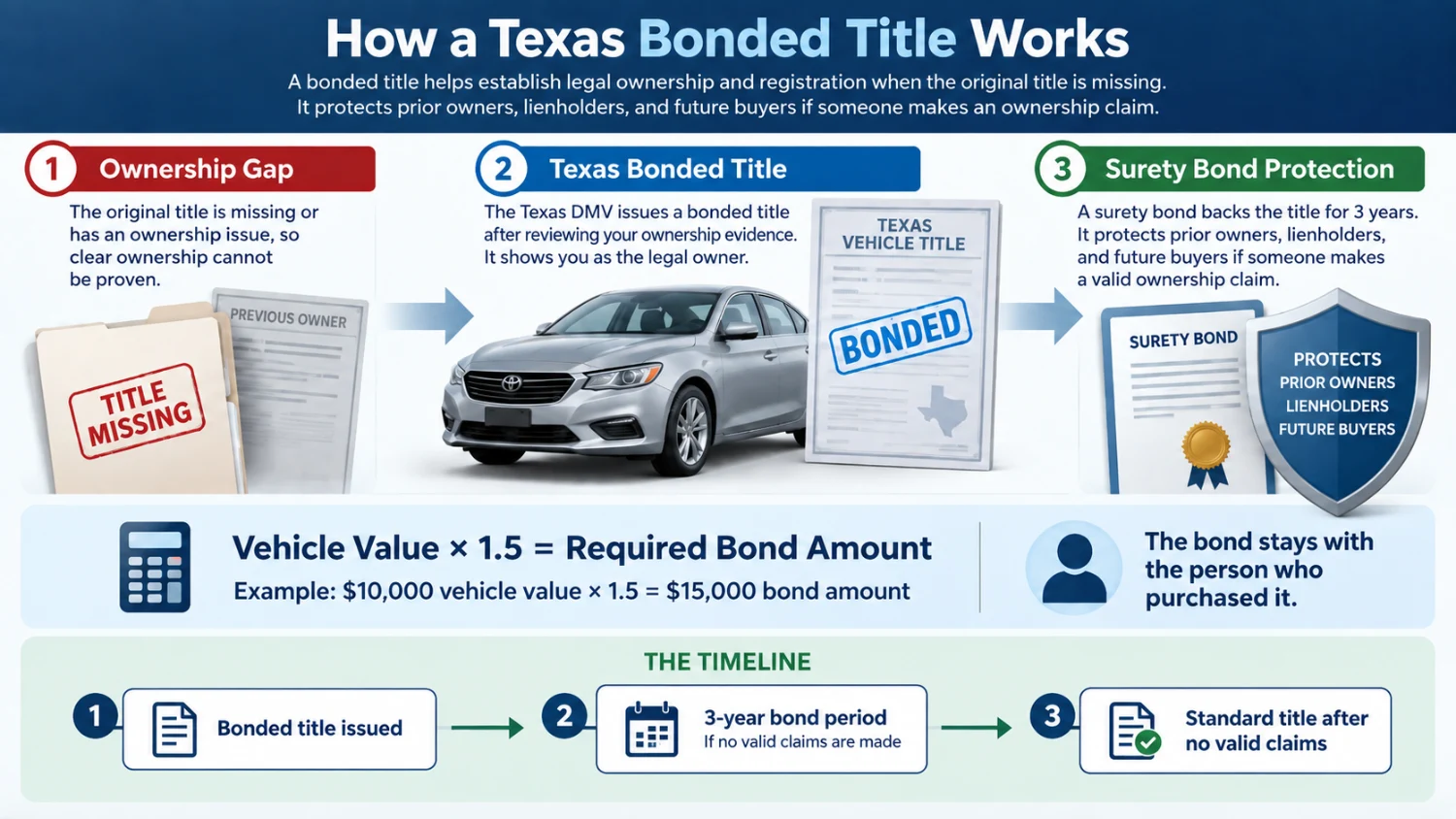
A bonded title is a certificate of title backed by a surety bond. A vehicle needs a bonded title when the original title is missing, damaged, or has ownership gaps. The title carries the same legal weight as a standard title for registration, insurance, and resale.
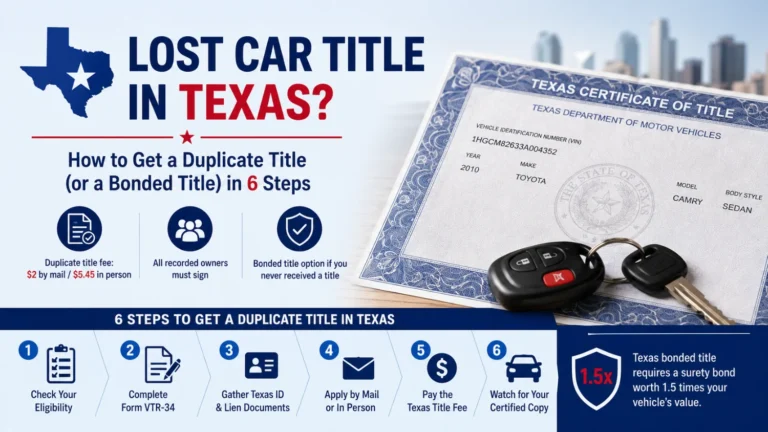
The bond lasts three years under Texas Transportation Code 501.053. The bond amount equals 1.5 times the vehicle’s value as set by the TxDMV. For example, a car worth $10,000 would need a $15,000 bond. After three years with no claims, the bonded title converts to a clean title.
The word “bonded” on the title does not mean the car is defective or stolen. It means a surety bond fills an ownership gap in the vehicle’s history. The TxDMV reviews all ownership evidence before issuing any bonded title. An auto theft investigator must also inspect the VIN on any vehicle not yet titled in Texas.
Read our Texas Bonded Title Guide for a deeper look at the bonded title process.
Is It Safe to Buy a Car with a Bonded Title?
Yes. Buying a car with a bonded title in Texas is safe when you verify the details first. The bonded status does create specific risks. But the benefits often outweigh them for prepared buyers.
Benefits for Buyers
- Lower purchase price. TIADA confirms bonded-title vehicles are worth less than identical cars with clean titles. Fewer competing buyers means more room to negotiate.
- Full legal validity. You can register, insure, drive, and sell the vehicle. Texas law treats a bonded title the same as a standard title.
- No bond liability for the buyer. The surety bond stays with the person who purchased it. If a prior owner files a claim, the bond purchaser pays. Not you.
Does the seller need a title bond before the sale can close? TMD Surety Bonds offers same-day approval with bonds starting at $100. Get your bonded title quote.
Risks to Watch For
- Ownership claims during the bond period. A previous owner or lienholder can claim the vehicle within three years. A valid court ruling could mean losing the car.
- Out-of-state transfer problems. Some states don’t recognize Texas bonded titles. This creates headaches if you move or sell to an out-of-state buyer.
- Lower resale and trade-in value. Dealers discount bonded title vehicles on trade-in. Some reject them outright during the bond period.
The good news is actual claims against bonded titles are rare. The next section breaks down what happens if one does occur.
What Happens If Someone Claims the Vehicle?
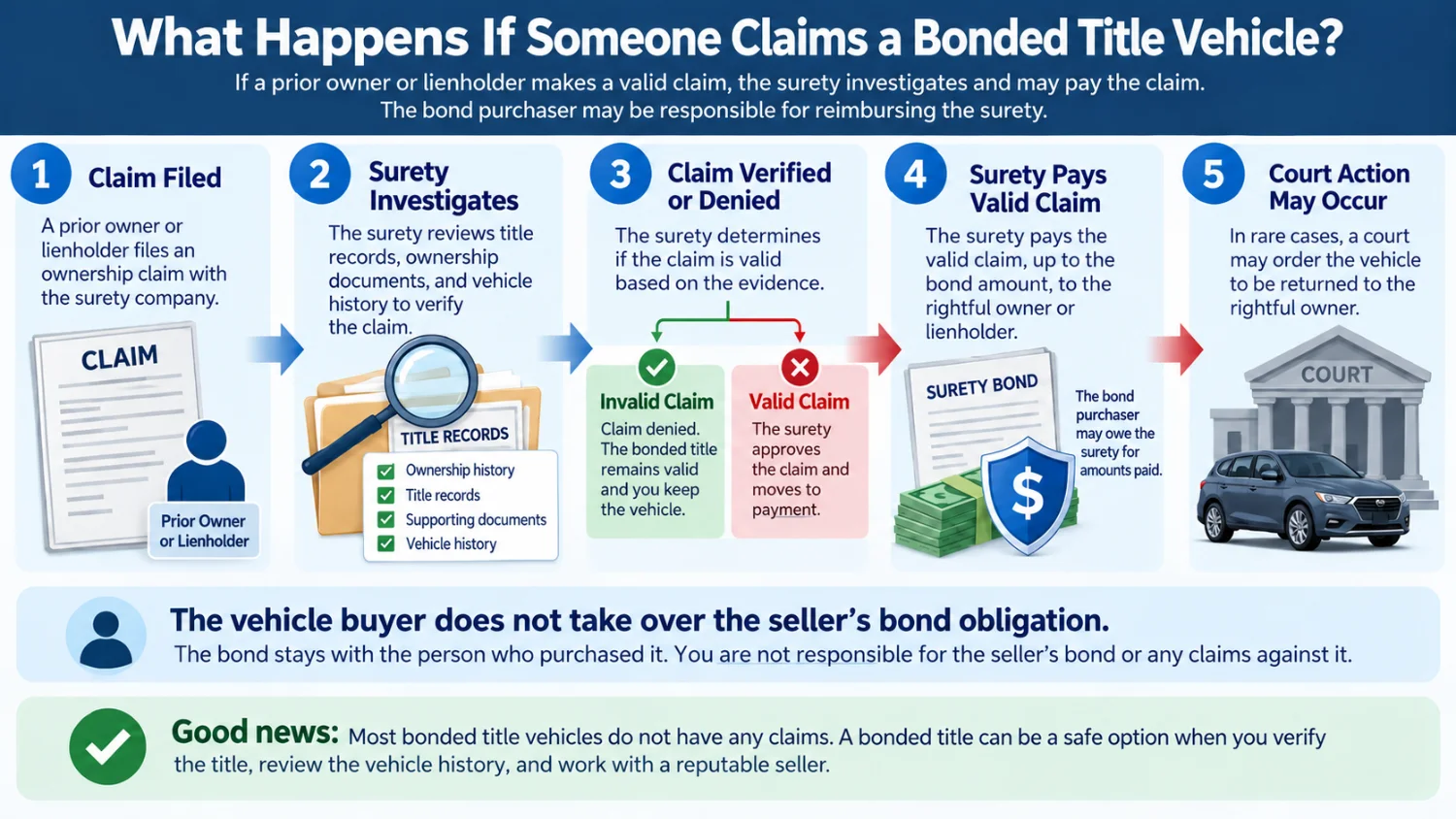
A previous owner or lienholder can file a claim against the surety bond during the three-year bond period. The buyer is not liable. Here’s how the process works, step by step.
- A person contacts the surety company and claims to be the rightful owner of the vehicle or holder of a valid lien.
- The surety company investigates the claim. They review documents, title history, and the claimant’s evidence.
- The surety denies invalid claims. Nothing changes, and the bonded title stays valid.
- A validated claim triggers a payout. The surety company pays the claimant up to the bond amount. The bond purchaser must then reimburse the surety.
- In rare cases, a court orders the vehicle returned. The buyer can then pursue the seller for recovery.
Texas law requires the bond to protect prior owners, lienholders, and future buyers. This covers both sides of the transaction.
Legitimate claims are rare for a reason. The TxDMV regional service center reviews all evidence of ownership before issuing a bonded title.
Vehicles never titled in Texas also need a VIN inspection by an auto theft investigator. These screenings filter out most fraud before a bonded title ever reaches a buyer.
Knowing the claim process helps you evaluate risk. But spotting problems before you buy is even better.
Red Flags When Buying a Bonded Title Car
Most bonded title transactions are legitimate. But some sellers use missing paperwork to hide theft, fraud, or undisclosed damage. Watch for these warning signs before you pay.
| Warning Sign | What It Means | What to Do |
|---|---|---|
| VIN on dash, door, and frame don’t match | Possible VIN swap or stolen vehicle | Walk away |
| Seller refuses to meet at the DMV or county tax office | Avoiding official verification | Walk away |
| Cash-only demand with no written receipt | Hiding the transaction from records | Insist on a signed bill of sale |
| Seller claims the process is “instant” with no inspection | Misrepresenting TxDMV requirements | Verify with TxDMV first |
| Vehicle has salvage, flood, or rebuilt branding | Compound title and condition issues | Get a full vehicle history report |
| Seller can’t explain why the original title is missing | May not be the rightful owner | Request all ownership documents |
Run the VIN through NICB’s free VINCheck tool before you pay. This check flags unrecovered theft claims and salvage records from participating insurers. Pair it with a full vehicle history report from Carfax or AutoCheck for a complete picture.
Get an independent mechanical inspection too. A bonded title covers ownership gaps. It does not cover hidden engine or frame damage.
Buying a vehicle with no title at all? Read our guide on how to register a car without a title.
Bonded Title Impact on Financing and Resale
A bonded title affects how you finance, trade in, and insure a vehicle. These financial realities should shape your negotiation strategy before you commit.
Can You Finance a Bonded Title Vehicle?
Most banks and traditional lenders won’t approve a loan for a bonded title vehicle. They can’t secure their lien against a title that could face a dispute during the bond period.
Credit unions tend to be more flexible on title status. In-house dealer financing and personal loans are other options.
Cash purchases are most common. Ask the lender about their bonded title policy before you commit to any deal.
Will a Dealer Accept a Bonded Title Trade-In?
Some dealers accept bonded title trade-ins. Many discount the value or reject them outright. One buyer on the TIADA blog discovered their vehicle had a bonded title months after purchase. The dealer never disclosed it.
Use this knowledge at the negotiation table. Factor the lower resale value into your purchase price.
A bond close to its three-year expiration carries less risk and earns better trade-in value. Dealers watch this timeline closely and often buy at a discount near expiration.
Does a Bonded Title Affect Insurance?
A bonded title alone does not raise insurance premiums. Insurers base rates on vehicle value, driving record, and coverage levels.
A bonded title reflects a paperwork gap, not vehicle damage. Vehicles with salvage, rebuilt, or flood branding face higher rates and fewer coverage choices.
How to Verify a Bonded Title Before You Buy
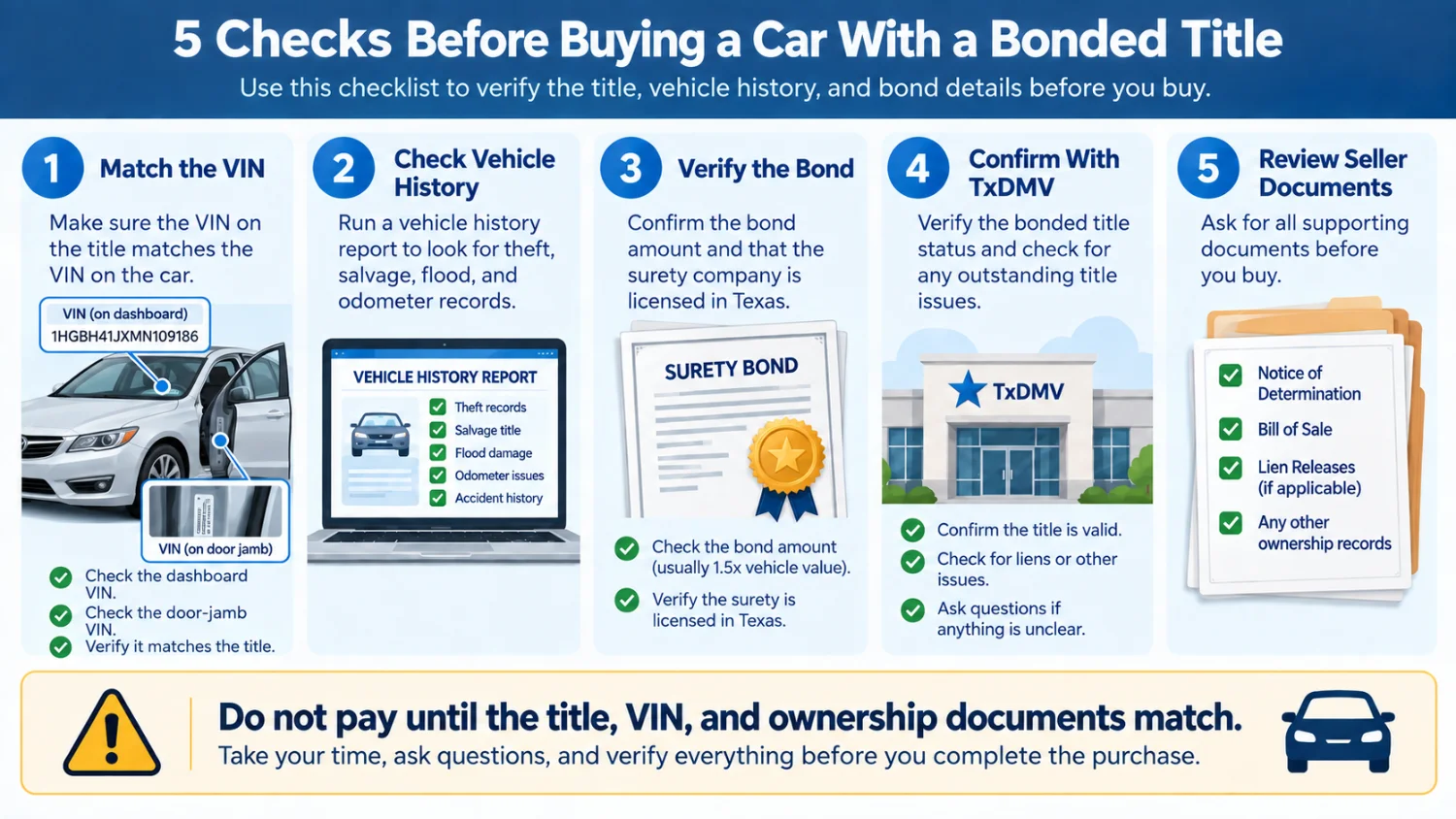
Verify the bonded title before you hand over any money. These five checks confirm the title is legitimate and the vehicle is safe to buy.
- Match the VIN. Compare the VIN on the dashboard, door jamb, and frame to the title documents. All three should be identical.
- Run a vehicle history report. Check for theft, salvage, flood, or odometer issues. Use Carfax, AutoCheck, or NICB’s free VINCheck tool.
- Inspect the bond document. Confirm the bond amount equals 1.5 times the value of the vehicle. Verify the surety provider holds a Texas license.
- Contact the TxDMV regional service center. Confirm the bonded title status and check for outstanding issues.
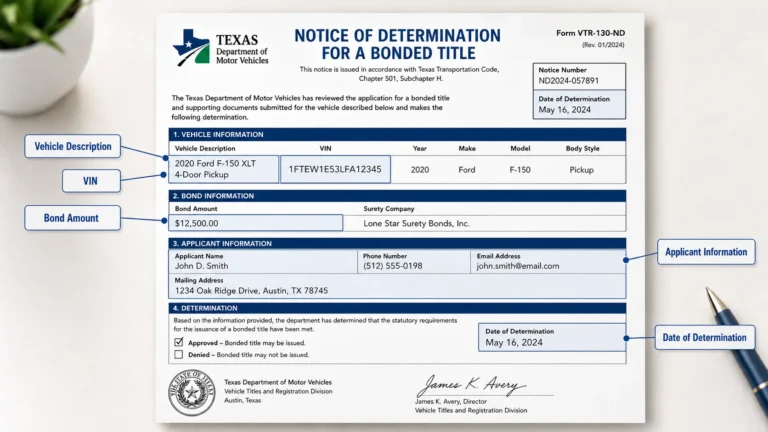
- Ask the seller for documents. Request the Notice of Determination (Form VTR-130-ND), the bill of sale, and any release of lien records. These docs prove ownership through a verified process.
Contact the seller early. A seller who resists sharing documents raises the same red flags covered above.
Want to confirm the title bond on a vehicle you’re considering? TMD Surety Bonds can verify bond details and answer your questions. Get in touch with TMD.
Protect Your Purchase with TMD Surety Bonds
TMD Surety Bonds has helped Texas buyers and sellers handle bonded titles for over 12 years. Every bond comes from an A+ rated surety provider.
Need to verify a bond on a vehicle you’re considering? TMD can answer your questions.
Is the seller still working through the bonded title application? Send them to TMD for same-day approval with bonds starting at $100.
Already bought a car without a title? You may be eligible for a bonded title to establish ownership of the vehicle.
FAQs About Buying a Car with a Bonded Title
Quick answers to common questions about buying a car with a bonded title in Texas.
Can a Bonded Title Become a Clean Title in Texas?
Yes. A bonded title in Texas converts to a standard title after a three-year period without any claims. Once the bond expires, contact your county tax office to request a regular title. They will mark the title as standard once the conversion is complete.
Can You Sell a Car with a Bonded Title in Texas?
Yes. You can sell a car with a bonded title in Texas. The car title transfers to the new owner of the vehicle. Texas law requires you to disclose the bonded status to the buyer before the sale closes.
How Long Does a Bonded Title Last in Texas?
A bonded title in Texas is valid for three years from the date the surety bond takes effect. Prior owners or lienholders can file a claim during this period. If no one files a claim within three years, the bond expires and the title becomes standard.
Is a Bonded Title Bad?
A bonded title is not bad. It is a legally valid vehicle title that allows you to register, insure, and drive the motor vehicle in Texas. The “bonded” label means a surety bond backs the ownership claim. It does not mean the car is defective or stolen.
Does the Surety Bond Transfer to the Buyer?
No. The surety bond stays with the person who purchased it. The bond does not follow the vehicle to a new owner. The bond purchaser is responsible for any claim repayment. The buyer of the vehicle is not financially liable for the bond.
Can You Buy a Car That Has a Bonded Title?
Yes. You can buy a vehicle with a bonded title in Texas. The bonded title proves ownership. It allows you to register, insure, and drive the car. Run a vehicle history report and verify bond details before you commit.
Can You Get a Loan for a Car with a Bonded Title?
Most banks won’t approve an auto loan for a car with a bonded title. They can’t secure their lien against a title that could face a dispute. Credit unions, personal loans, and in-house vehicle dealer financing are more likely options.
Bonded Title for a Boat